
Non-Return Ring Failure: Four Signs and Replacement Points
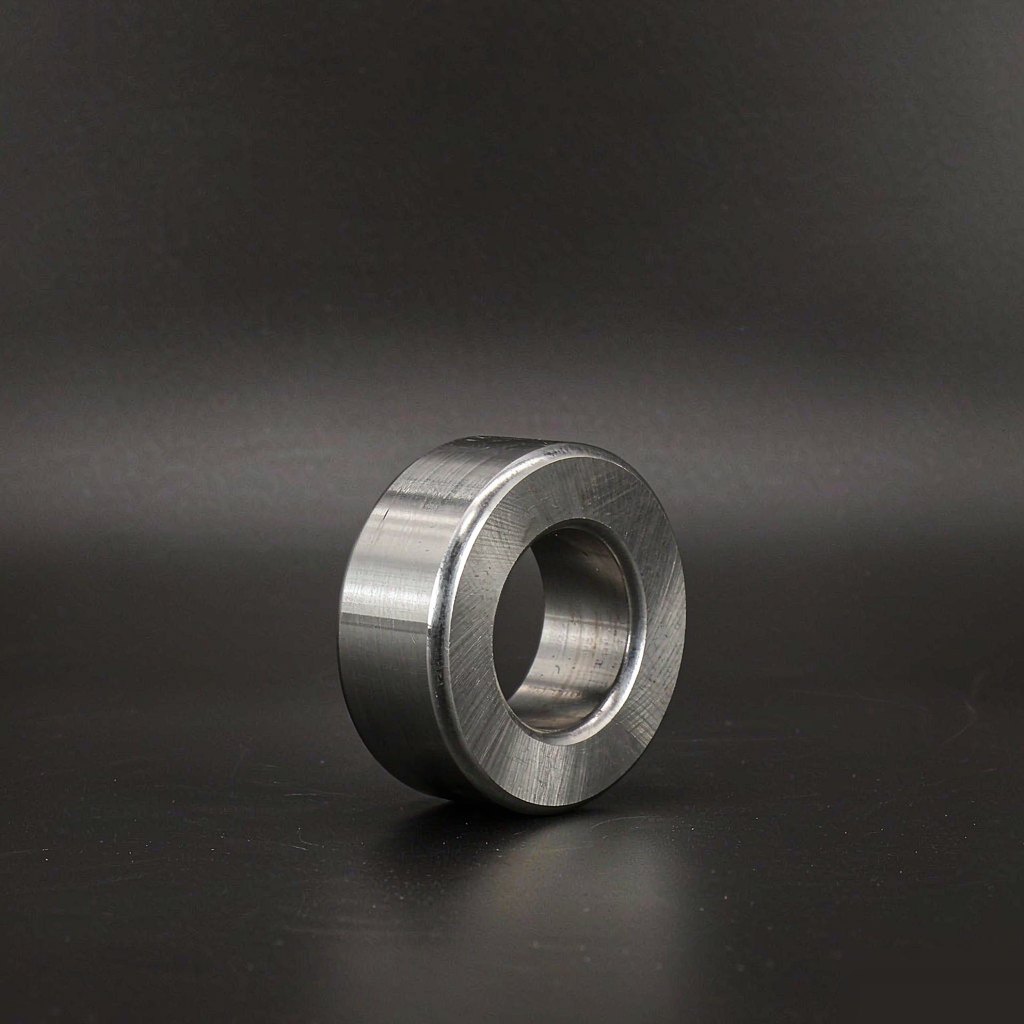
The non-return ring is the smallest part on the screw and the one that decides shot-to-shot repeatability. It never fails suddenly; it makes the process gradually hard to hold while everyone compensates with parameters. Four signs catch it before quality escapes.
Sign 1: drifting cushion
A healthy ring seals melt at the front during recovery, so the cushion position stays put. A worn sealing face lets melt back over the ring during recovery, and the cushion starts moving shot to shot. Operators begin nudging shot size constantly - the earliest and most ignored sign.
Sign 2: widening part weight spread
Weigh 20 consecutive shots. Ring wear shows in the weight range before it shows in appearance. As wear grows, back-flow during packing under-fills the cavity: weight trends down, thin walls short-shot, thick walls sink.
Sign 3: more stroke needed to fill
Same mold, same material, lately needing extra stroke and packing time to fill. This reads as "machine losing pressure" but is usually the ring not closing fully during injection - part of the shot pressure is spent on back-flow instead of filling.
Sign 4: packing instability across shifts
An imperfectly closing ring transmits packing pressure unevenly. Dimensions drift between shifts, and on multi-cavity tools cavity-to-cavity weight consistency degrades first.
What to inspect at teardown
- Ring sealing face: the contact band against the seat should be continuous and even. Interrupted bands, pitting or one-sided wear mean misalignment or past contamination.
- Seat face: same standard. Ring and seat wear as a pair - inspecting the ring alone misses half the problem.
- Sliding fit between ring OD and seat bore: measure the clearance; excessive clearance leaks melt sideways under injection pressure.
- Ring deformation: measure OD at two orientations; ovality from high injection pressure shows up quickly on small rings.
Replacement points
- Replace ring and seat as a pair, sealing faces machined in the same batch and matched to each other.
- Confirm the sliding clearance against drawing rather than by feel - too tight seizes, too loose leaks.
- Match material to the resin: nitrided steel for commodity use; hardened or overlaid versions for glass- and mineral-filled compounds.
- Assembly cleanliness matters: debris pressed into the sealing face is a common cause of "leaks right after fitting".
For commodity work an annual teardown check is enough; abrasive compounds belong in quarterly checks. Weight records are the free online monitor - when the weight range widens by roughly a third, schedule the teardown.
相关产品
Need a matched ring-and-seat set? Send the diameter and groove width, or a photo of the old parts, and we will confirm dimensions before machining.